
What Makes a Good Cooperative Game?
Not all cooperative games are created equal. The genre has a persistent design challenge: if one player has more experience or confidence than the others, they can easily slip into directing every move, effectively turning the game into a solo experience with an audience. Good cooperative design prevents this through information asymmetry, simultaneous pressure, or tight individual constraints that force genuine delegation.
The games below handle this challenge in different ways. Pandemic limits discussion in certain situations. Codenames keeps information hidden by design. The best cooperative games are ones where the conversation at the table is as engaging as the mechanical decisions being made.
Pandemic — The Cooperative Benchmark
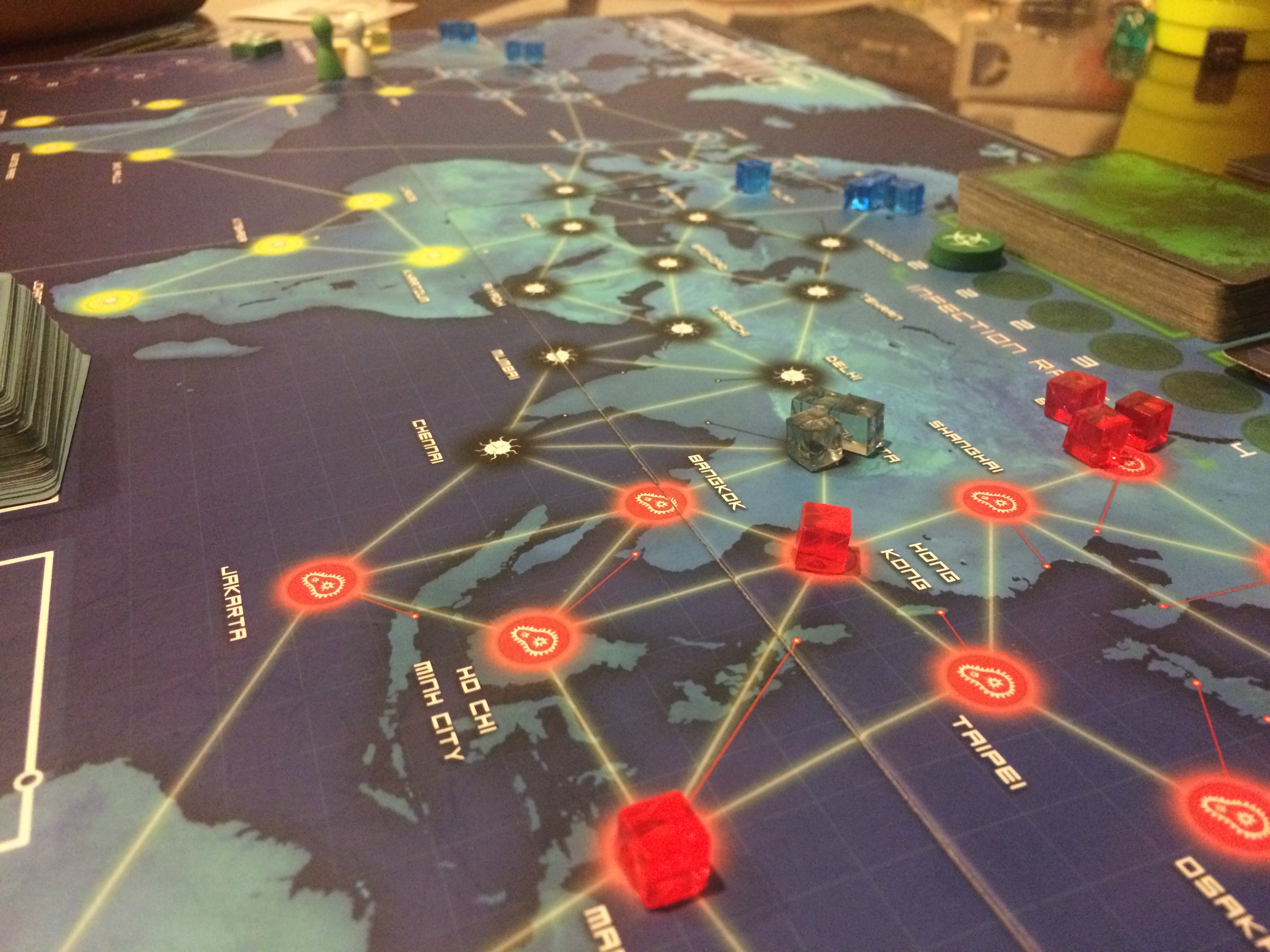
Pandemic puts players in the role of specialists racing to contain and cure four diseases spreading across a global map. Each turn involves moving, treating outbreaks, and sharing cards to build toward the four cures required for victory. The game's difficulty comes not from unclear rules but from the cascading spread mechanic: cities that already have disease cubes are drawn from the infection deck more frequently as epidemic cards reshuffle it, creating genuine moments of crisis that no amount of planning can fully prevent.
The base game remains the best entry point into the series. It teaches cleanly, plays in under an hour, and produces memorable near-win situations that make players want to try again immediately. The role asymmetry — each player has a unique ability — creates natural discussion about who should do what, without making any single role feel mandatory.
Pandemic Legacy: Season 1 extends this foundation into a campaign format with permanent consequences and a developing narrative. It is consistently one of the highest-rated board games on BoardGameGeek and for good reason: the legacy mechanics transform individual sessions from game nights into episodes of a shared story.
Pandemic is available in Czech translation through ADC Blackfire. The Czech edition includes all standard rules and has been confirmed error-free in the translation. Retail price: approximately 700–850 CZK.
Common Mistakes in Pandemic
New players frequently focus too heavily on treating existing cubes while ignoring epidemic card management. Correctly positioning the Medic role and prioritising cube removal in high-infection-rate cities is usually more effective than trying to accelerate the cure research. First-time groups should also resist the temptation to always play at the easiest difficulty — the game becomes genuinely interesting at standard difficulty where the tension is real.
Codenames — Social Deduction Without Losers
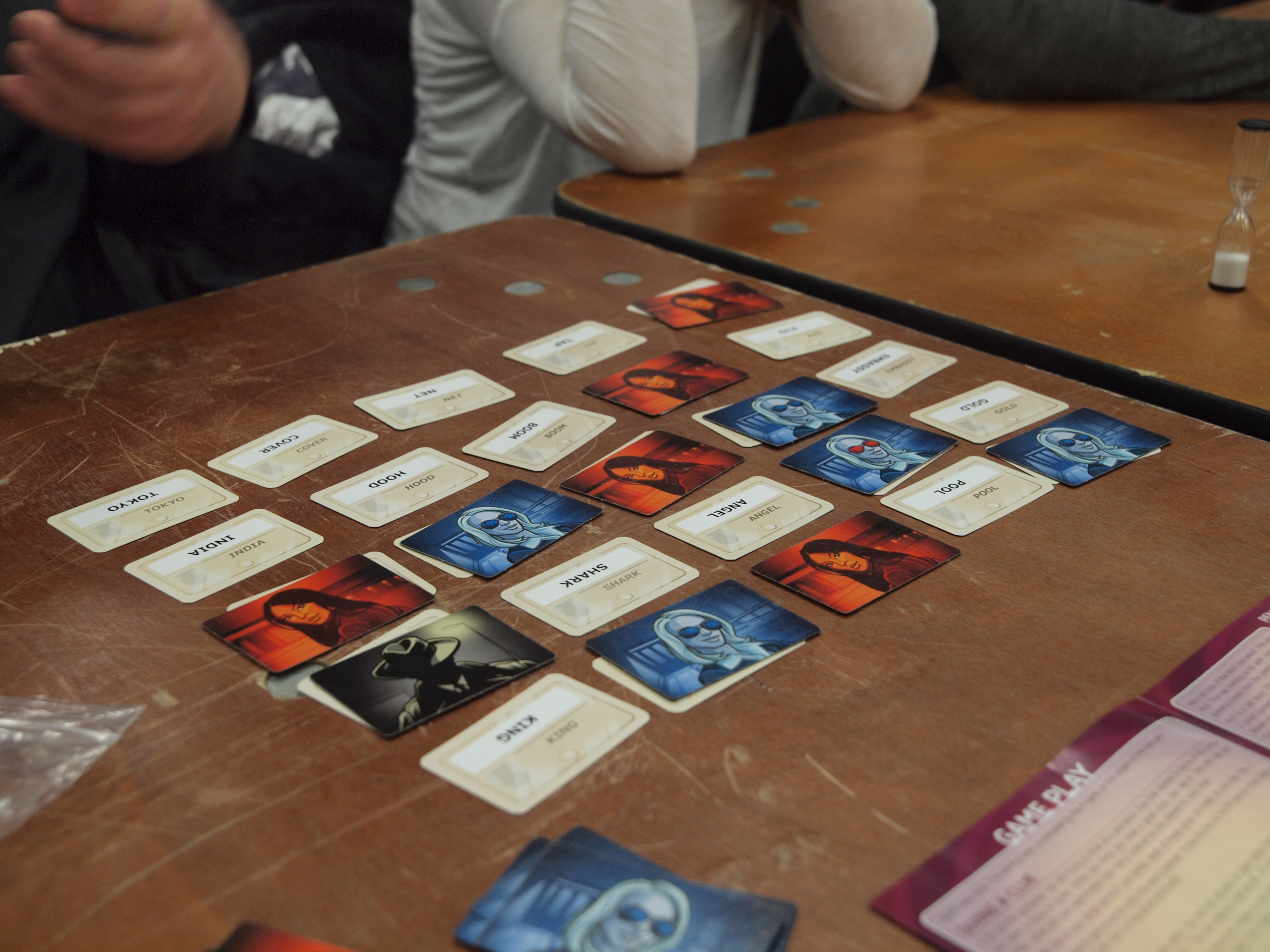
Codenames deserves particular attention here: it is a Czech game. Designed by Vlaada Chvátil and published by Czech Games Edition in Brno, Codenames won the 2016 Spiel des Jahres and became one of the fastest-selling board games of its decade. Players split into two teams, each with a spymaster who sees a colour-coded grid of word cards. Spymasters give single-word clues to link multiple cards; teammates try to identify their team's words while avoiding the opposing team's cards and the single black assassin card that ends the game immediately.
The game works because the tension between clarity and risk is entirely in the spymaster's head. A clue that connects three words perfectly might also accidentally point to an assassin card — whether you take that risk depends on how well you read your team's associative thinking. This creates different experiences every session, even with identical word grids.
Codenames also scales unusually well. It plays adequately at two (using a solo/cooperative variant) and remains sharp at eight or more, where team dynamics and inside references add a social layer that smaller groups cannot generate. For gatherings with mixed gaming experience, it is frequently the single most reliable choice.
Czech Games Edition — A Note on Local Support
Czech Games Edition operates from Brno and has been one of Europe's most respected publishers since the success of Galaxy Trucker and Through the Ages. Their games are widely available in Czech stores, and several carry Czech-language editions as primary releases rather than translations. Supporting them directly supports Czech game design. Their full catalogue is at czechgames.com.
The Quiet Year — Cooperative Storytelling
Not strictly a board game in the traditional sense, The Quiet Year is a map-drawing game of collaborative storytelling. Players draw cards representing weeks in a year following the departure of an unnamed enemy, making decisions about a small community's survival, conflicts, and development. At year's end, a different enemy arrives and the story ends. There are no win conditions. The goal is a richer story.
This type of cooperative play appeals to groups who find conventional win-lose dynamics less interesting than the process of collaborative world-building. It works best with players comfortable improvising and willing to let the story take unexpected directions. For those groups, it is one of the more memorable table experiences available — sessions are regularly discussed for days afterward.